
Cabinet Doors
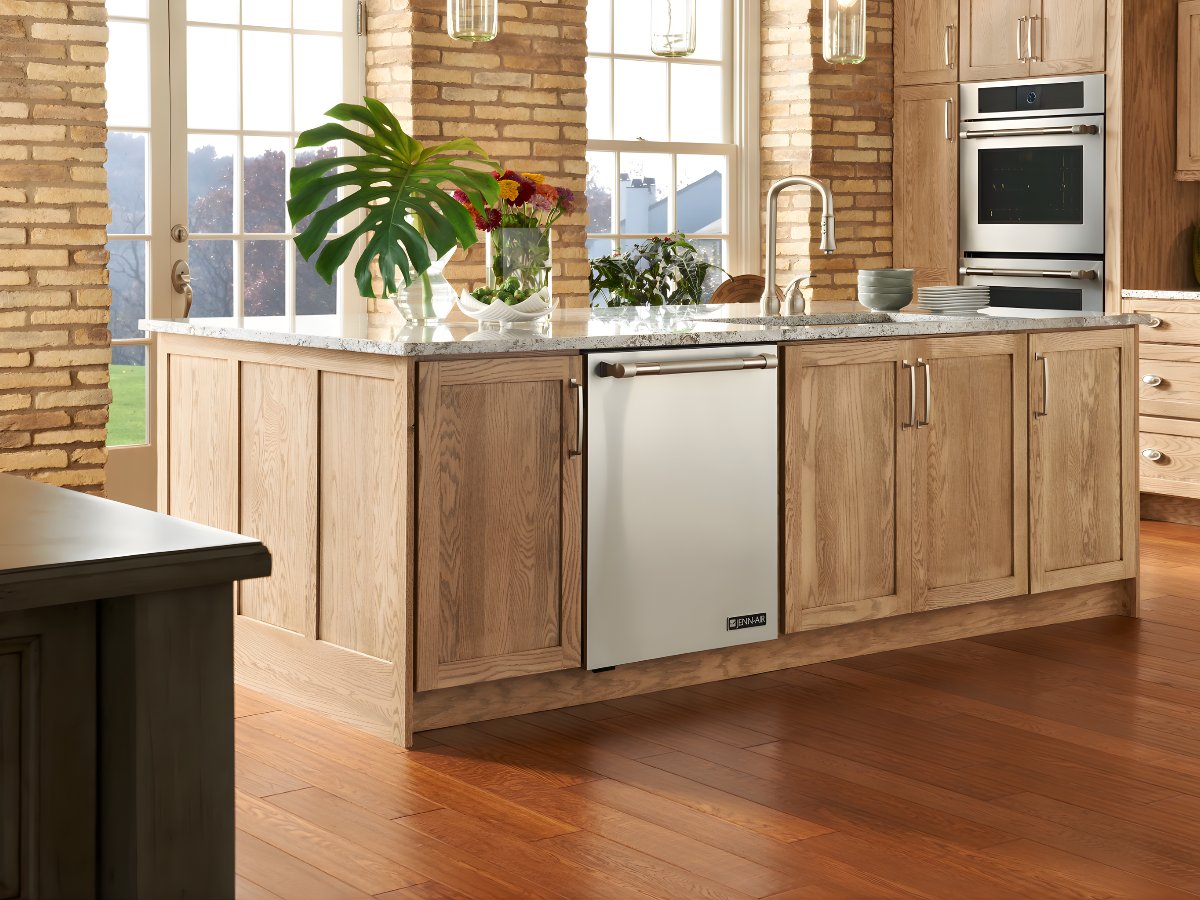
Nothing else in a kitchen changes the feeling of the space as much as the door style. Come look at them in person before you decide.
Where to Start
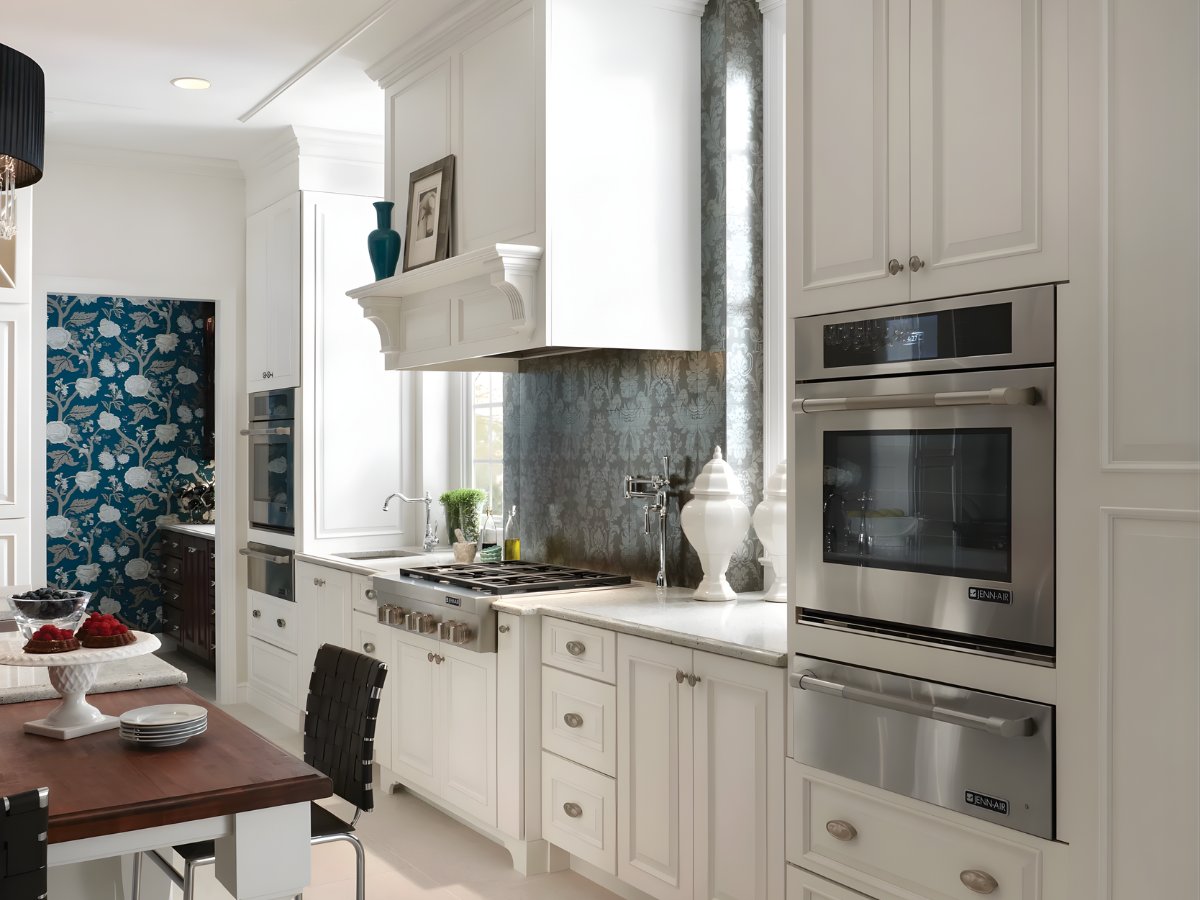
Countertops, hardware, paint colors and flooring all get chosen around the cabinet doors, which is why we start there. A slab door and an inset beaded door in the identical finish produce two kitchens that have almost nothing in common.
We work in cabinet doors two ways. If your boxes are sound, we can supply and hang new doors and drawer fronts over what you already have. If you are building new cabinetry, the door style is the first specification we take, and everything from hinge type to how the finish is applied follows from it.
Screens flatten a door. A raised panel photographs as a rectangle, and in person it is a series of shadow lines that shift as you walk past. Our Auburn Hills showroom exists so you can put your hand on the real thing.
Door Styles
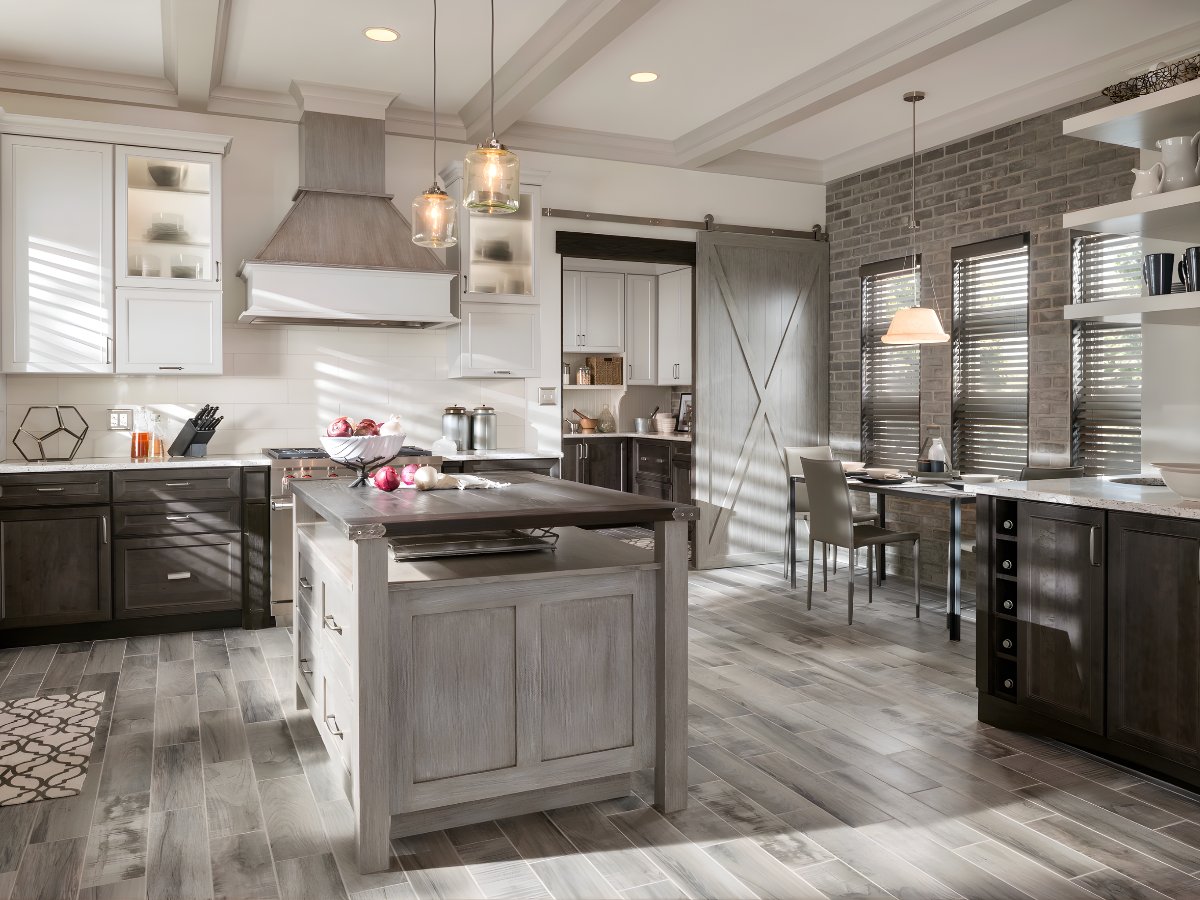
A square frame around a recessed flat panel. It has been in continuous use for two centuries because it does not fight the rest of the room, and it sits comfortably in traditional and modern kitchens alike.
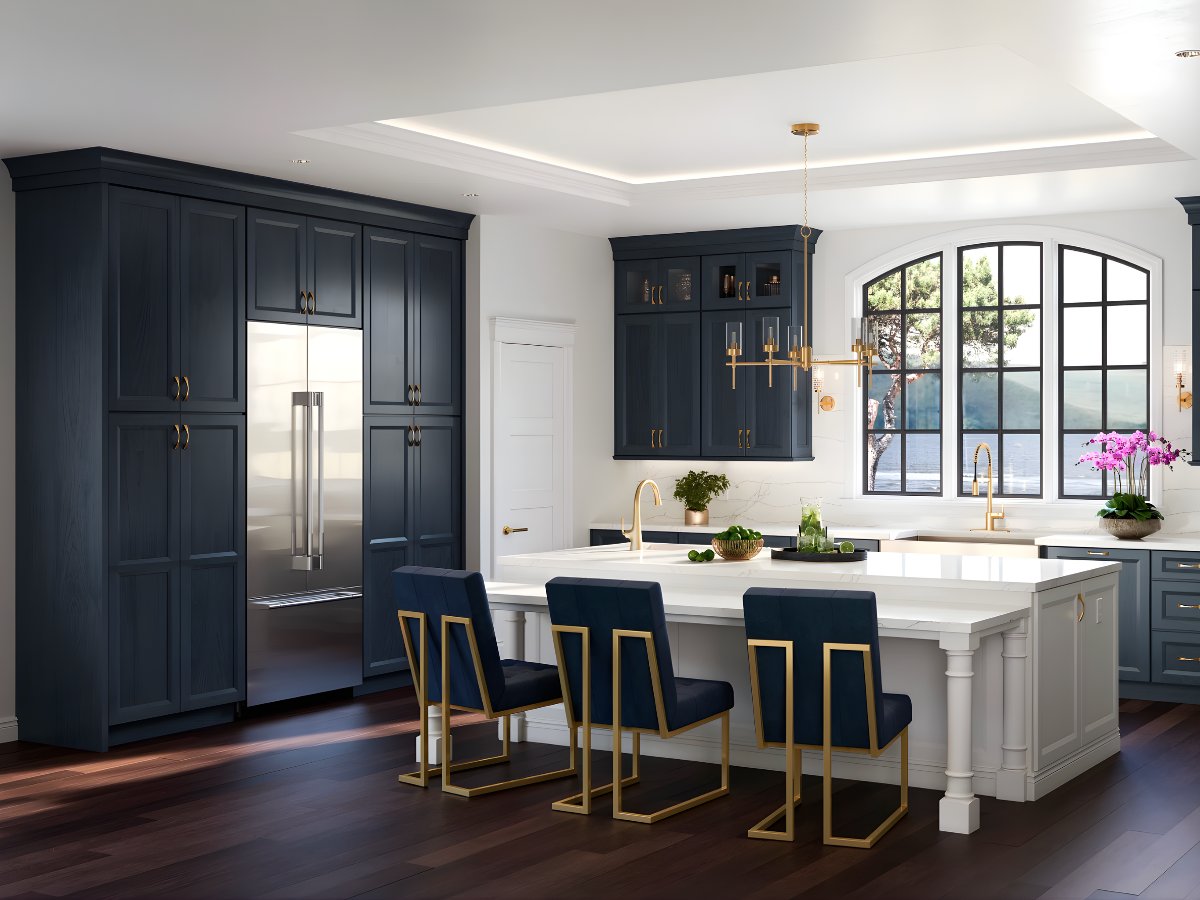
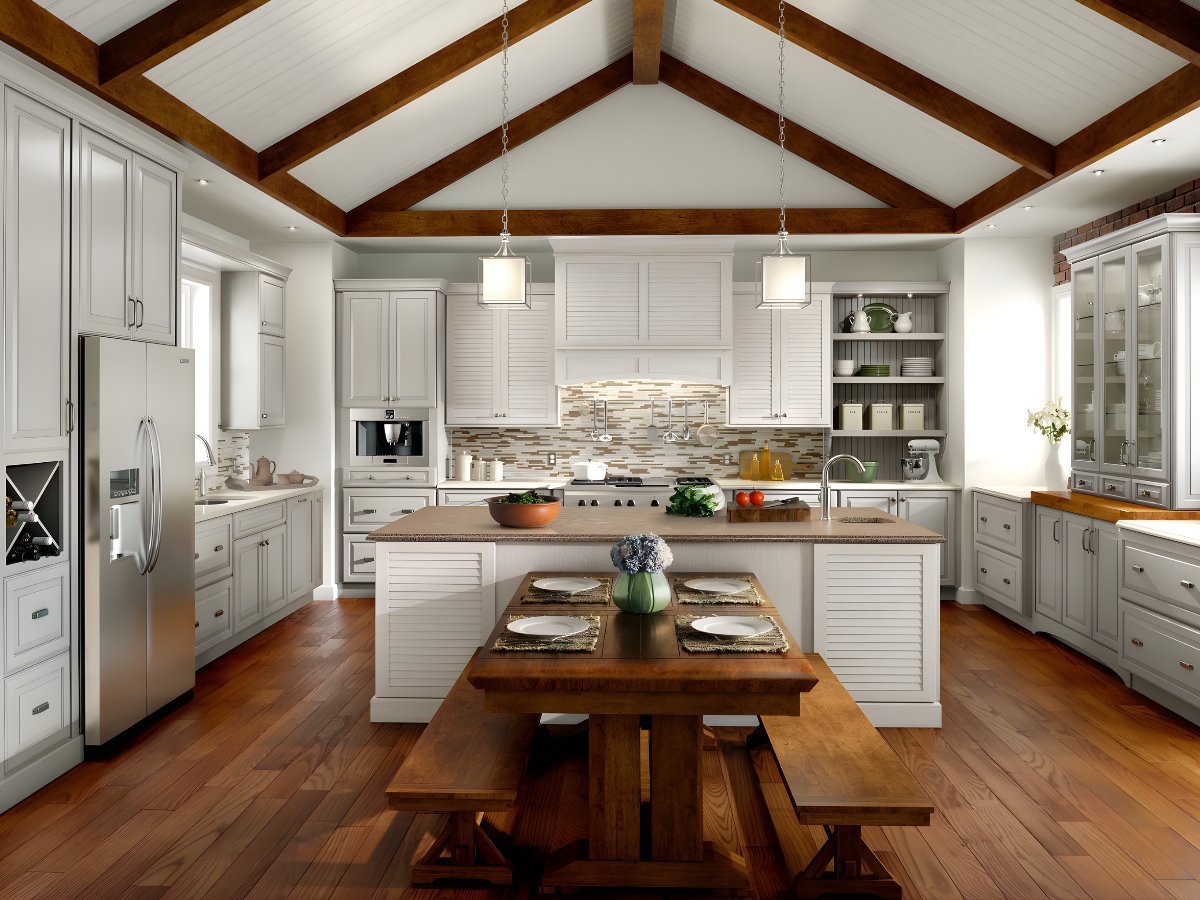
A center panel that stands proud of the frame with a profiled edge. It carries stain and glaze beautifully and gives a kitchen depth and formality that a flat panel cannot.
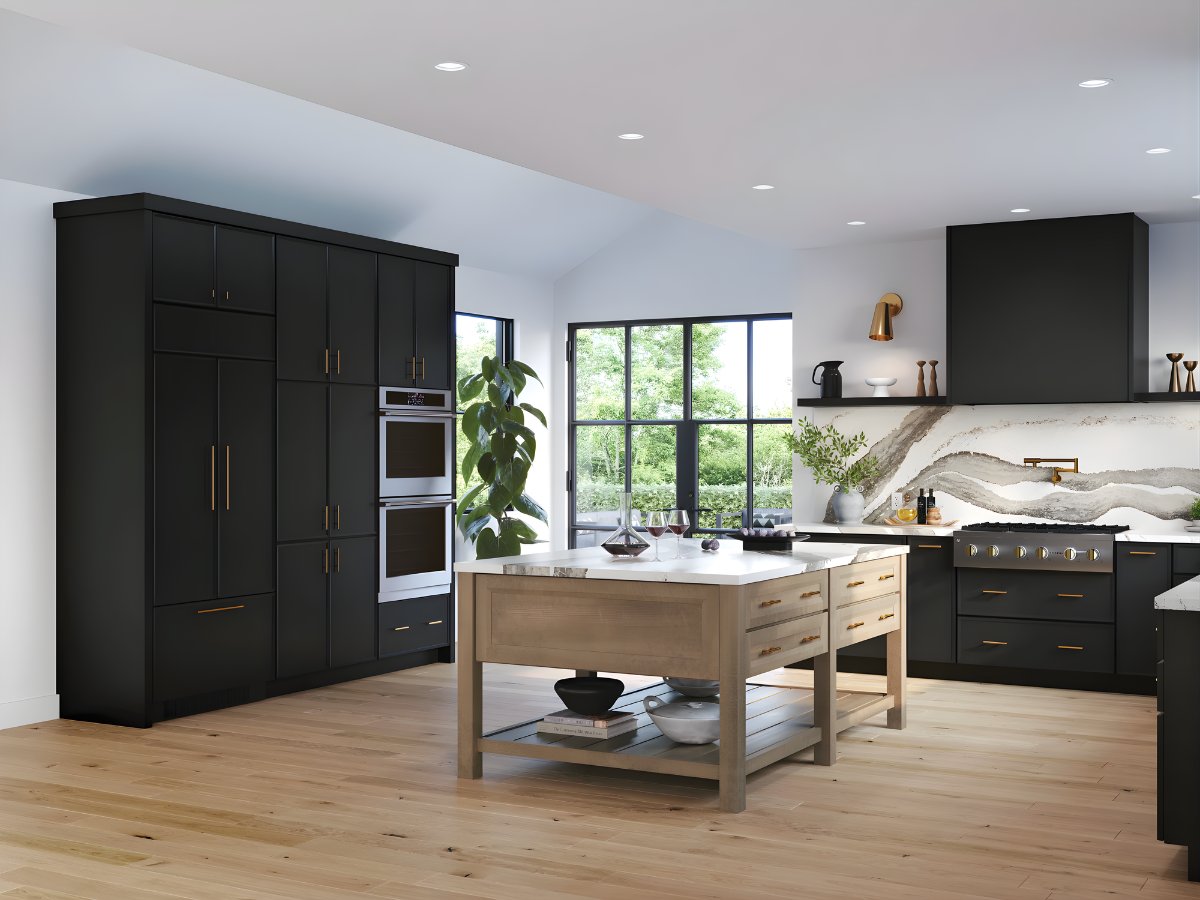
A single uninterrupted plane with no frame and no panel. In wood it makes the grain the entire story. In paint or laminate it disappears, which is often exactly the point.
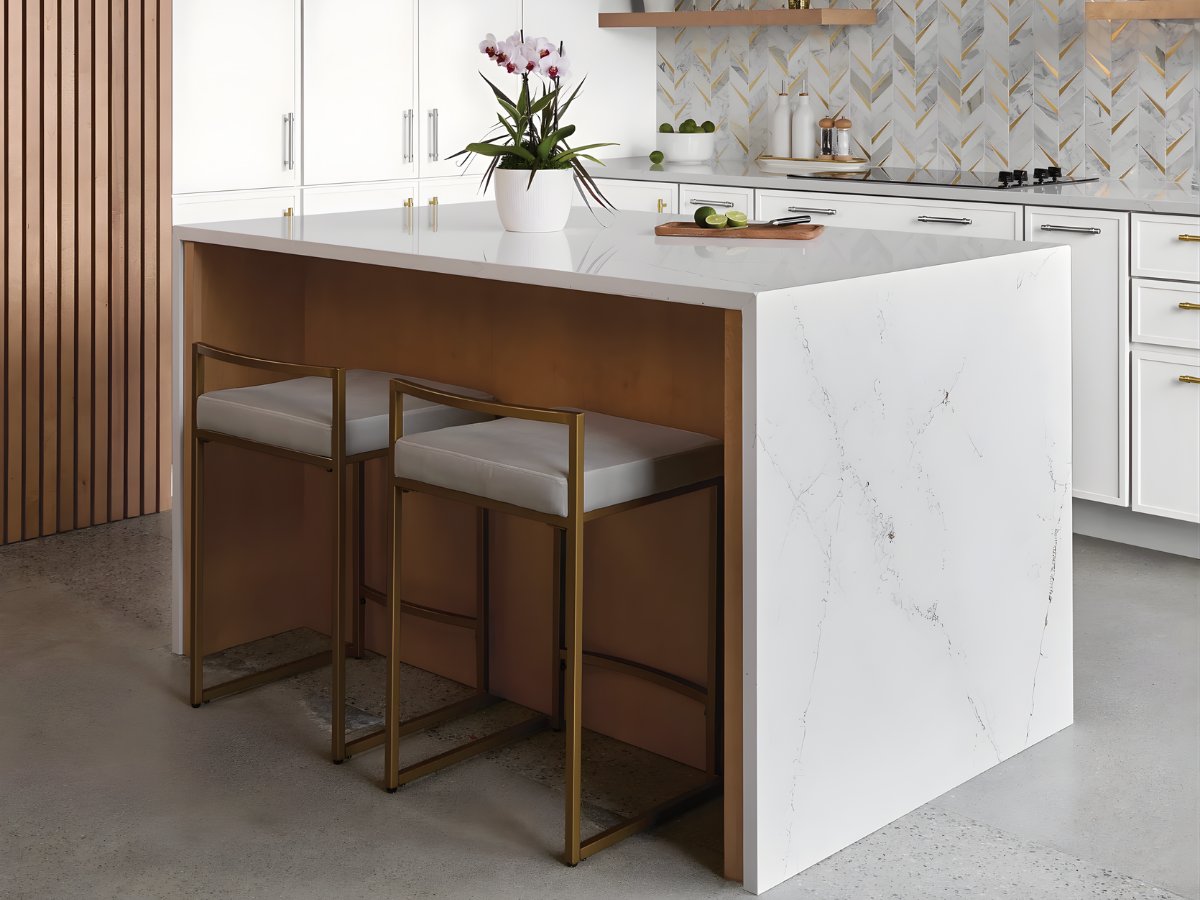
Doors set flush inside the face frame rather than over it. It is the most demanding way to build a cabinet and the most convincing, because the frame stays visible and every reveal has to be even.
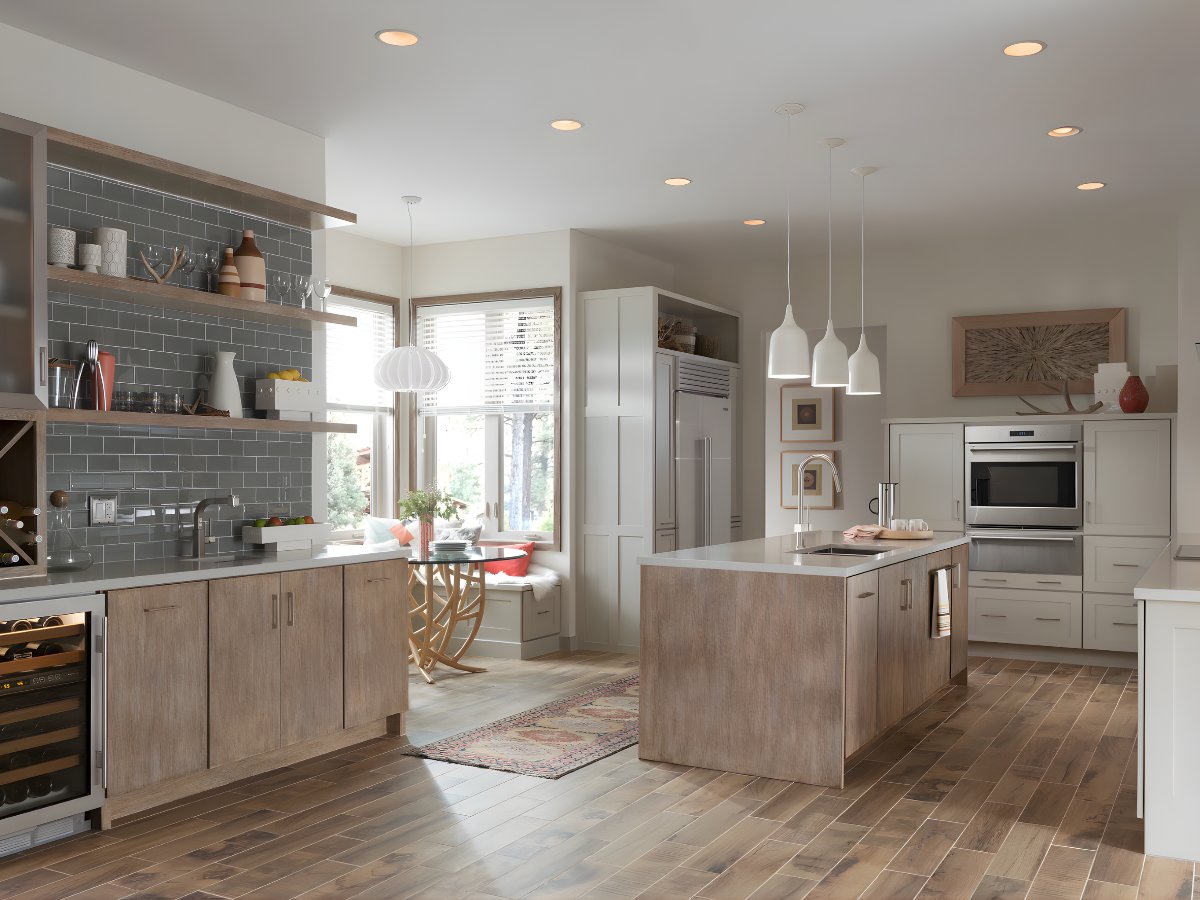
Inset construction with a fine bead worked into the frame around each opening. It is period correct for older Southeast Michigan homes and adds a line of shadow that reads as handmade.
Clear, seeded, reeded or leaded glass in place of the panel, usually in a few upper cabinets rather than the whole run. Paired with interior lighting it gives a wall of cabinetry somewhere to breathe.
Construction
Two kitchens with the same door style can look completely different depending on how the door meets the cabinet. This is the vocabulary worth knowing before you shop.
| Full Overlay | Partial Overlay | Inset | |
|---|---|---|---|
| How it sits | On top of the frame, covering nearly all of it | On top of the frame, leaving frame visible between doors | Flush inside the frame |
| Visual effect | Continuous doors, thin even reveals | Traditional framed look, wider gaps | Furniture-like, frame visible around every door |
| Interior access | Widest openings | Slightly reduced | Reduced by the frame |
| Relative cost | Standard | Standard, often the value option | Highest, tightest tolerances |
| Reads as | Transitional to contemporary | Traditional, builder standard | Custom, period, heirloom |
Straight Talk
Answers
Yes, and it is one of the best value decisions in a kitchen. Replacing doors and drawer fronts while keeping sound boxes is the core of cabinet refacing. The one thing to plan for is the exposed cabinet sides and face frames, which need matching veneer so the new doors do not sit against an old finish.
Full overlay doors sit on top of the cabinet frame and cover nearly all of it, leaving thin, even lines between doors. Inset doors sit flush inside the frame, like a well fitted drawer, so the frame stays visible around each door. Inset is the more traditional and more demanding of the two, because the tolerances are tight and the cabinet has to be built precisely to hold them.
Shaker still accounts for the largest share of what leaves our showroom, largely because a simple square frame with a recessed panel reads correctly in a 1920s bungalow and a new build alike. Slab doors dominate the contemporary end, and raised panel remains the choice for traditional and transitional kitchens.
Sometimes, and honesty matters more than optimism here. Matching a discontinued door profile is often possible in a custom shop, but matching an aged finish exactly is harder than matching a shape. We would rather tell you a new door will read slightly different than have you discover it after installation.
Maple, cherry, oak and hickory cover most of what we sell, along with painted doors, which are frequently built with an MDF center panel because it holds paint without the seasonal movement solid wood has. The right species depends as much on the finish you want as on the wood itself, which is why the showroom is worth the trip.
It varies by line, door style and finish, and painted and glazed finishes generally take longer than stains. We confirm the lead time in writing at the time of order rather than quoting a number that may not hold.
Where We Work
Homeowners come to our Auburn Hills showroom from across Oakland County to choose doors in person.
Cabinet Doors
The showroom at 1908 N Opdyke Road has real doors in real finishes. Twenty minutes there beats a week of browsing photos.
(248) 377-0707